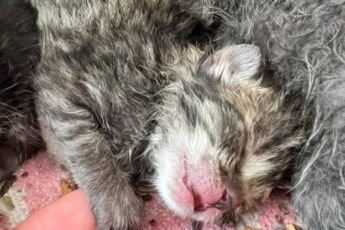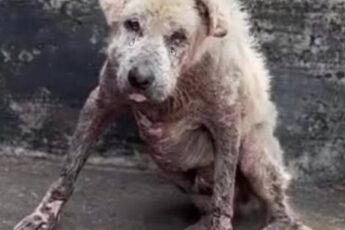
He weighed less than a kilogram. Even less than a standard bag of sugar. And he trembled—not from the cold, but because his fragile body could barely cling to life. Too much pain for such a short life. Too much loneliness.
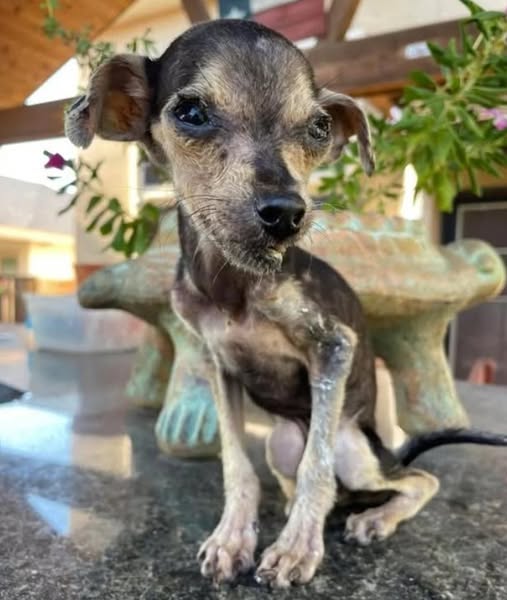
He lay on a stone slab in the backyard of a stranger’s house. No one called him. No one cared. He was just there—like he’d sprouted from a crack in the pavement, like a whisper from thin air, reminding us: some lives are so fragile, even the wind fears disturbing them, lest they shatter.
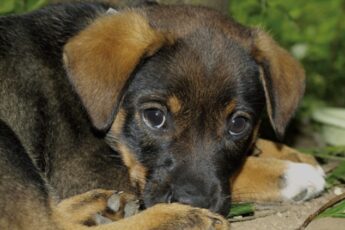
His head seemed too large for his body. Patches of fur were missing; his skin was flaky. His little legs trembled. His eyes—so dark, so wide they shouldn’t have fit in that delicate skull—gazed steadily. No reproach. No hope. Just… seeing. As though understanding everything long ago.
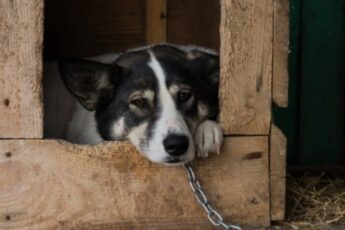
People walked past. Some thought it was a rat. Some didn’t look. Some said, “Sad…” and moved on. And he just stayed there. Didn’t run. Had nowhere to go.
Until a girl, about ten years old, came close and whispered:
“Who are you? Why are you alone?”
He didn’t answer. He just tilted his head slightly. And that single little motion held everything: fear, resignation, and one final plea.
Her name is Dasha. She was spending the summer with her grandmother and wandered the old backyard for adventures. When she saw that tiny creature—her first feeling wasn’t pity. It was anger. At the world. How could someone make it come to this? How could no one notice, help, even feel sorry?
Dasha lifted the puppy into her arms—he was so light he seemed like a toy. She took him home. Her grandmother gasped: «Where did you find him?» But upon seeing how he trembled, she only said: «Let’s get him into the tub—right now.»
They washed him with warm water and a drop of shampoo. He didn’t resist. He just breathed—barely. Wrapped in a towel like a newborn, he fell asleep on the girl’s arms—calm, for the first time in a long while.
The next day, he went to the vet. The diagnosis was grim: “Slim chances. He’s at death’s door—malnourished, rickety, infected…” And: “Be prepared—he may not make it.”
But Dasha looked into their eyes and said only one thing:
“He will survive. I know it.”
And he did.
Weeks passed before he could stand. Months before he could run. His fur regrew slowly—like grass after a drought. But those big, wise eyes remained. And now they held something new: a spark. Trust.
They named him Zhuk—“Beetle” in Russian—because at first he seemed small and invisible, and then turned into someone vibrantly alive. He grew. Slightly crooked, thin, with ever-attentive ears—but alive.
Today, Zhuk lives with Dasha. He eats from his own bowl, plays with plush toys, knows commands. He curls up beside her while she does homework. And every night before sleep, she whispers: “You’re not alone. Never again.”
And he, pressing close with all his warmth, seems to say:
I know. Thank you for seeing me in the world that never looks down. Thank you for seeing me. Zhuk—not a toy, not a shadow, but me.
If you ever meet him on the street, he may growl out of fear. But if you gently extend your hand and let him sniff your fingers—he will remember. How it feels to be seen on the darkest of days.
Someone thought it was a rat. Some didn’t look closely. Some thought, «How sad…» and walked on.
He weighed less than a kilogram. Even less than a standard bag of sugar. And he trembled—not from the cold, but because his fragile body could barely cling to life. Too much pain for such a short life. Too much loneliness.
He lay on a stone slab in the backyard of a stranger’s house. No one called him. No one cared. He was just there—like he’d sprouted from a crack in the pavement, like a whisper from thin air, reminding us: some lives are so fragile, even the wind fears disturbing them, lest they shatter.
His head seemed too large for his body. Patches of fur were missing; his skin wa